Molex + Allspice: Collaboration for the next generation of connected products
Every hardware designer knows Molex. And even if you don’t work hands-on in electronics design, you’ve used a smartphone, driven a modern vehicle, visited a hospital, or connected to a cloud service at some point. All of these depend on products built by Molex. For more than 80 years, Molex has been a leading global supplier of electronics connectors and interconnectivity solutions, spanning industries from automotive and aerospace to healthcare and data communications. Designing products at scale for the systems that keep the world connected.
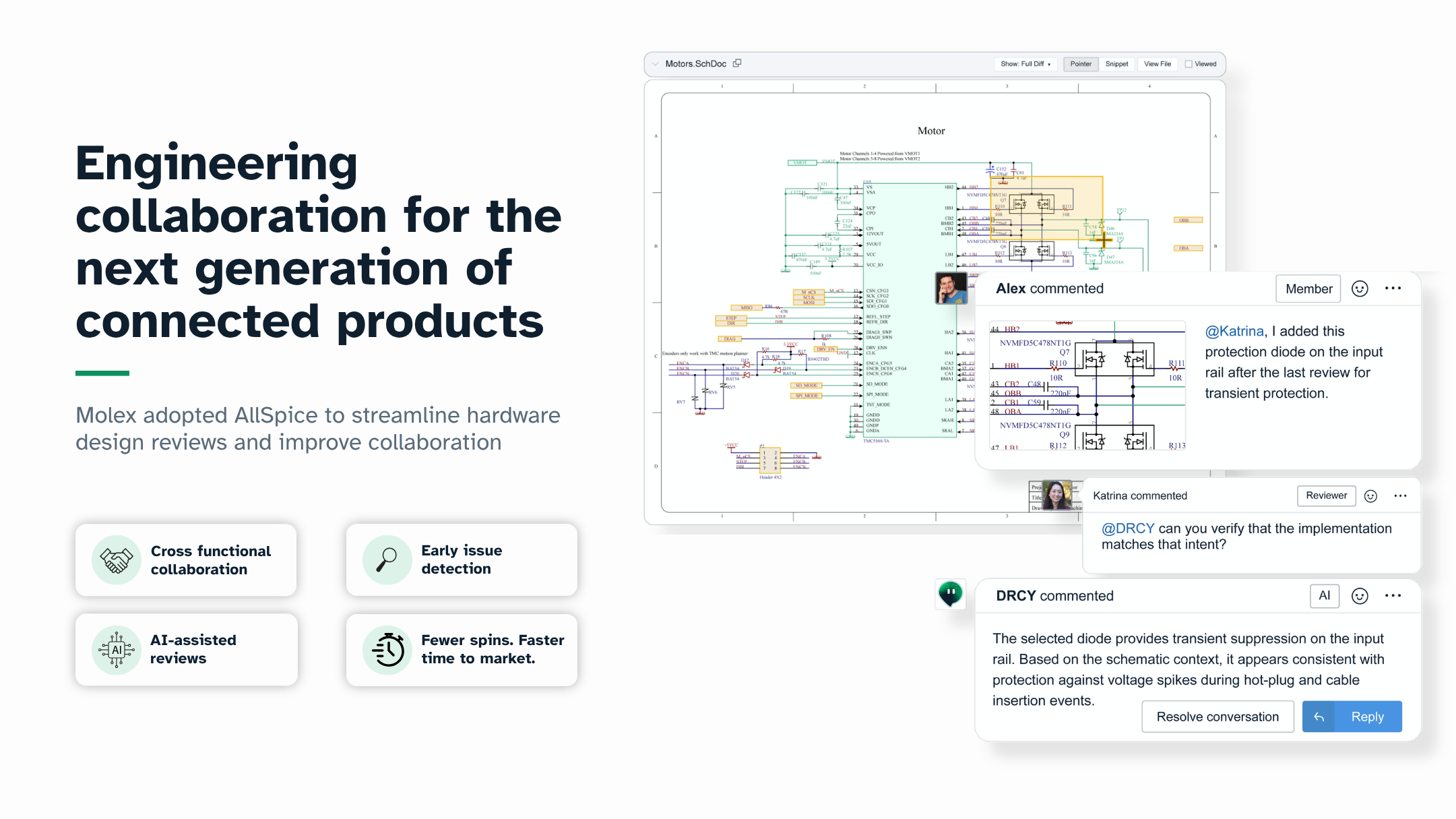
Within Molex, the DataCom & Specialty Solutions division develops high-speed networking solutions for AI infrastructure like hyperscale data centers and cloud computing. Building products at the cutting edge of rapidly evolving markets requires Molex’s engineering team to review and iterate quickly without compromising quality. To support a better collaborative review workflow, Molex adopted AllSpice to streamline hardware design reviews and improve collaboration, while using DRCY as an AI review agent to identify potential design issues before fabrication. Within just a few weeks, they had already utilized DRCY to uncover several design issues that could have led to additional board spins, delayed schedules, and cost overruns.
Engineering at AI scale
Developing reliable high-speed optical networking products is an uphill battle for engineering teams. Molex's own Reliability and Hardware Design Survey found that 98% of hardware engineers face challenges designing for reliability, citing increasing product complexity, limited testing time, and pressure to accelerate time to market as major concerns.
Teams like the DataCom & Specialty Solutions division can face some critical challenges:
- Designing for AI-scale networking: New generations of AI infrastructure push demands for bandwidth, power density, and optical connectivity. Hardware teams need to meet today's requirements while leaving room for tomorrow's standards.
- Finding issues early: Hidden electrical net mapping discrepancies, incorrect pinouts on high-pin-count ASICs, or overlooked datasheet requirements can remain hidden across complex multi-sheet schematics. Catching these issues during design review is far less costly than discovering them after fabrication.
- Balancing compressed verification timelines: Aggressive development schedules often lead to delayed verification planning or shortened environmental life testing, meaning increased risk of undetected component degradation in live data centers.
- Connecting design decisions across disciplines: High-speed networking products require electrical, SI/PI, mechanical, manufacturing, and test engineers to review the same design from different perspectives. When review comments are spread across emails and PDFs, it's difficult to understand why a design changed or whether an issue was actually resolved.
- Keeping pace as designs outgrow manual review: Manually tracing differential pairs, verifying connector interfaces, and checking hundreds of datasheet requirements has become overwhelmingly time-consuming in modern hardware design. So it's no surprise that more than 80% of engineers surveyed by Molex believe AI can play a meaningful role in improving product reliability.
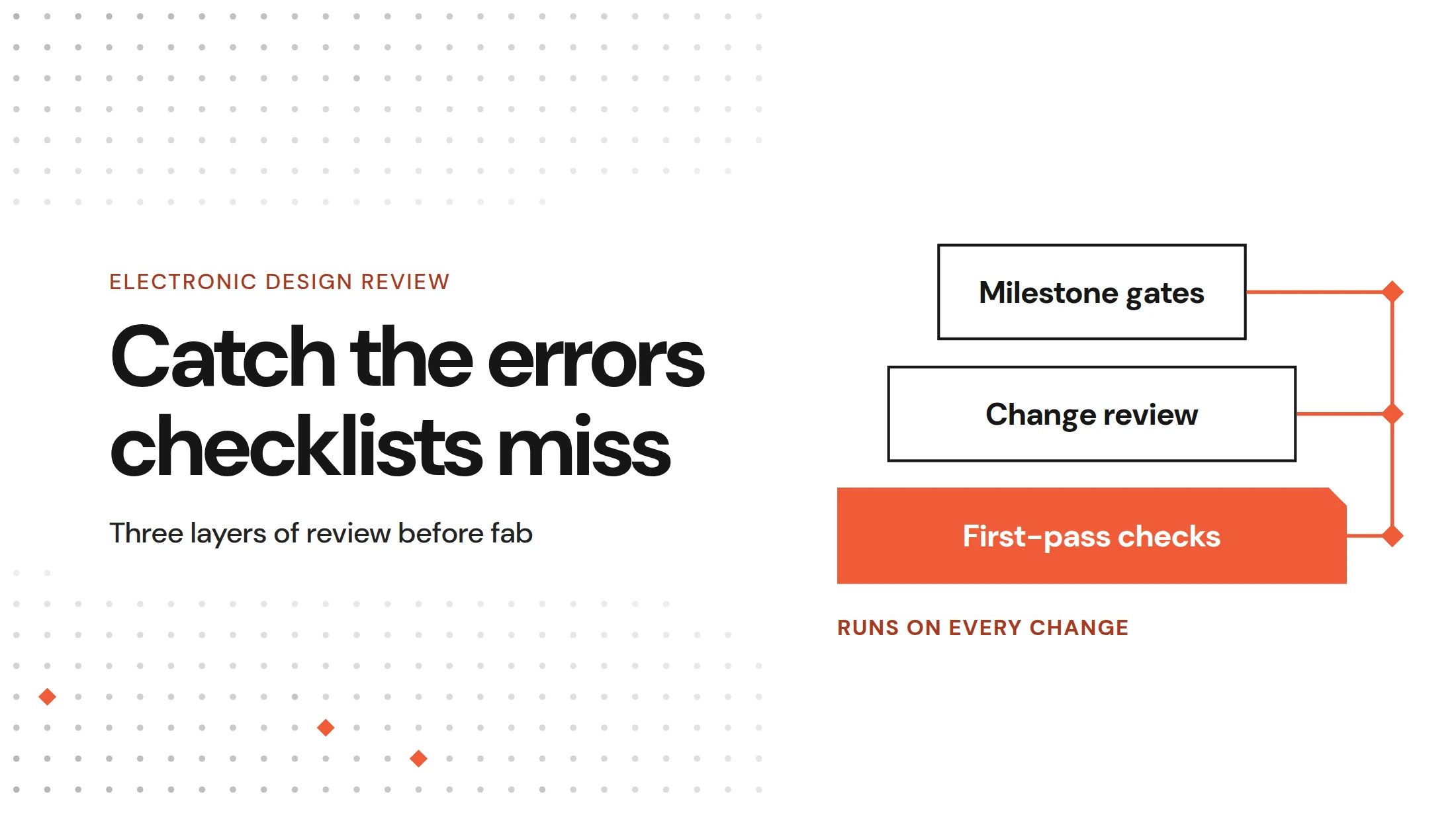
These kinds of challenges can't be solved by adding more review meetings or longer checklists. They require a better design review process. One that helps engineers identify issues earlier and collaborate more effectively. One that helps reviewers make informed decisions before designs ever reach fabrication.
Building better design reviews
By combining AllSpice for collaborative hardware review workflow with DRCY for AI-assisted analysis, Molex strengthened several key parts of its development process.
- Shift design verification earlier: Instead of waiting for prototype builds or formal verification, engineers can identify potential design issues and datasheet non-compliance during schematic review, when changes are faster and less expensive to make.
- Standardize design reviews: Giving every engineer a shared workspace for reviewing schematics and PCB layouts helps ensure feedback is consistent and traceable in the context of the design.
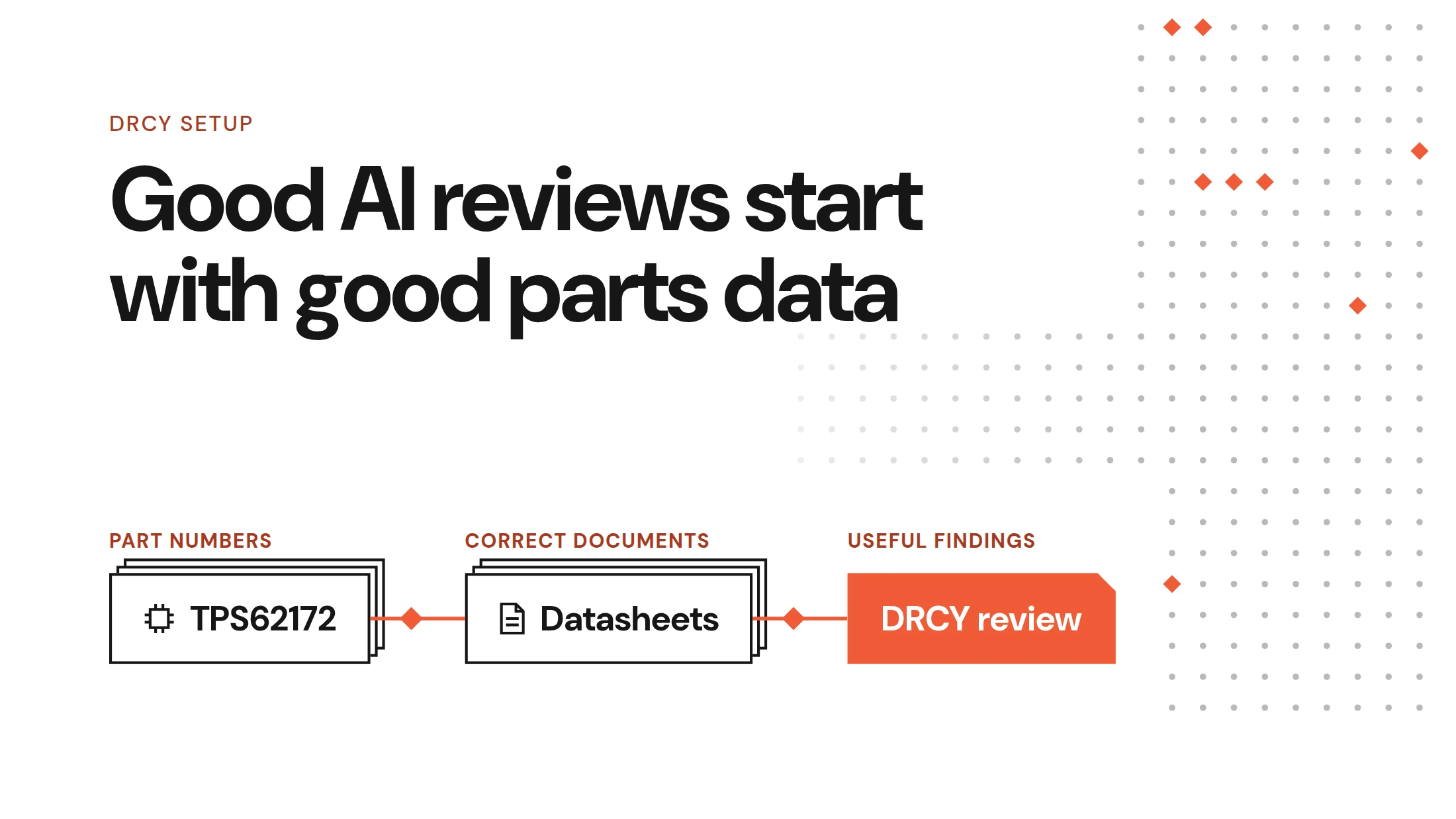
- Augment engineering expertise with AI: DRCY provides a first pass review layer that surfaces potential issues, allowing engineers to focus on higher-value design decisions instead of manually checking every requirement.
- Capture engineering knowledge: Design discussions, review comments, and resolved issues become part of the project history, making it easier to understand why decisions were made and reuse that knowledge on future programs.
- Reduce the cost of iteration: Catching issues before fabrication helps avoid unnecessary board spins and keeps development schedules on track.
These improvements helped Molex move from a reactive design verification approach to a more proactive review process.
Stronger decisions, faster releases
The value of AllSpice became apparent almost immediately. Within just a few weeks of deployment, Molex's engineering team was already using DRCY to identify design issues, reducing their risk early in the development process to keep projects on schedule.
"While we have only been using the tool for a few short weeks, DRCY has identified issues on several different designs that would have resulted in a board spin had we not addressed. This has helped us avoid schedule delays and accelerate our product development and production release."
— Glenn Lee, Director, Hardware Engineering at Molex
The benefits extended beyond that. By moving design reviews into a collaborative environment, engineers could review schematics and PCB layouts in context and discuss issues directly within the design. AllSpice became the source of truth to maintain a complete record of feedback throughout the project lifecycle.
"The platform enables engineers to highlight specific portions of the schematic and layout for comments, review, and discussion, making it easier to understand the design context quickly and to resolve issues efficiently. This has greatly enhanced intra-team communication, improved the quality of design reviews, as well as provided a design repository to document comments, create, track and close issues, and maintain a historical record for future reference."
— Glenn Lee
AllSpice and DRCY have helped Molex strengthen multiple aspects of their engineering workflow. By improving the way teams communicate, AllSpice enables engineers to spend less time managing reviews and more time developing the next generation of high-speed networking products.
Powering the next generation
AI infrastructure continues to rapidly change and evolve, and the demands on hardware engineering teams will only continue to grow. Molex is proof that building a modern engineering workflow can be the key for helping teams move faster without compromising quality.
Although they have only recently adopted AllSpice, the early results have already demonstrated value. As Molex continues to expand its use, they can look forward to future capabilities that will further enhance engineering productivity, design quality, and time to market.