Under the hood: How DRCY reviews your schematics
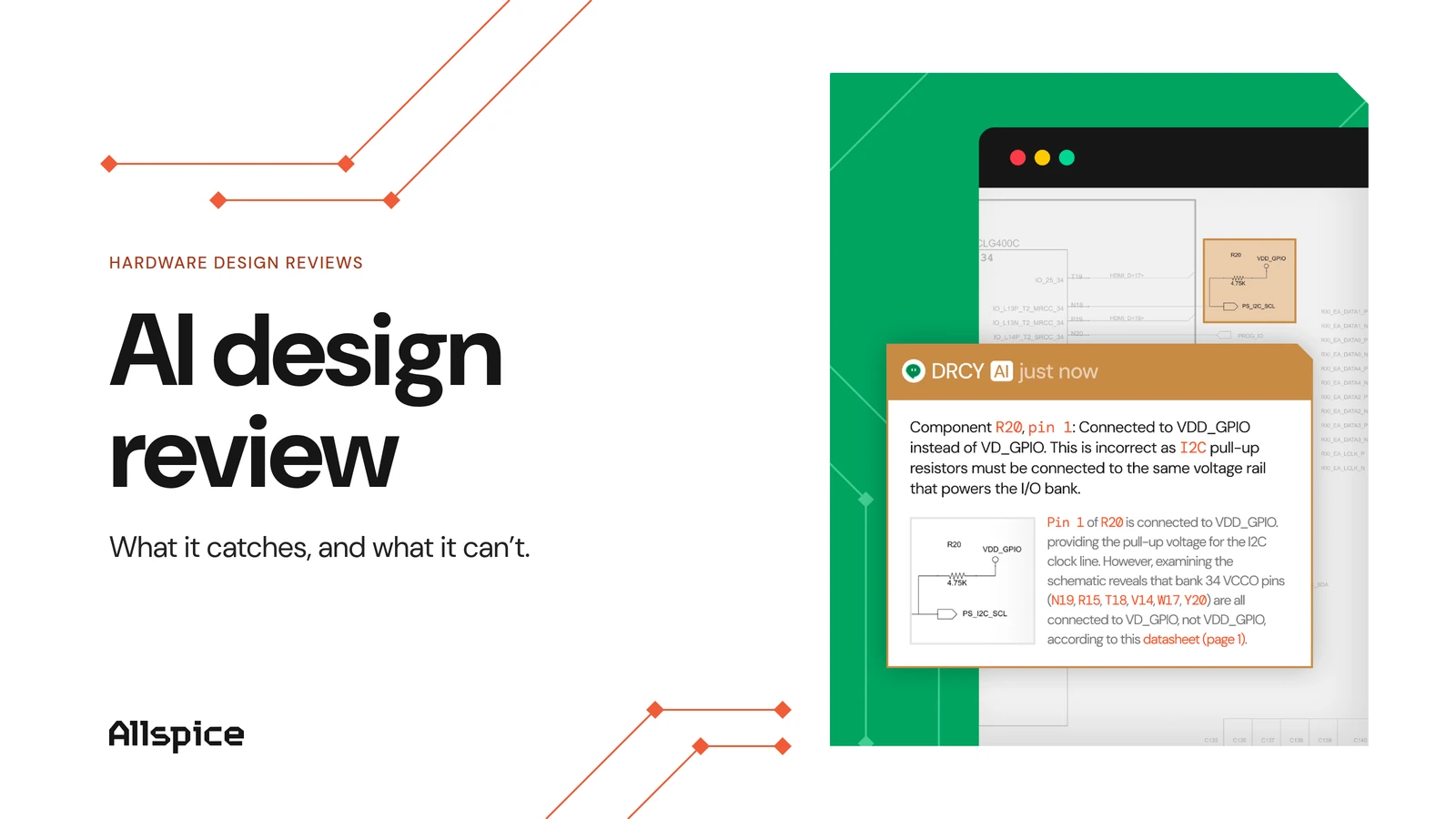
In our latest post, we introduced DRCY, an AI-powered design review agent that flags design issues, like voltage mismatches, swapped signals, and component incompatibilities before they turn into expensive board spins. Now we’re going a layer deeper. Instead of focusing on what DRCY does, this post breaks down how it works, and the concepts behind it. Whether you’re evaluating DRCY for your team or simply want a clearer mental model for using AI agents in a hardware workflow, this article should give you a practical framework to build on.
The name itself is a hint: DRCY (pronounced "DAR-SEE") is our play on DRC (Design Rule Check). But unlike traditional rule checkers that run static tests against fixed constraints, DRCY reasons broadly about your design. It's a general-purpose circuit design rule checker that goes well beyond what teams can encode in traditional DRC.
Built into your workflow, not bolted on
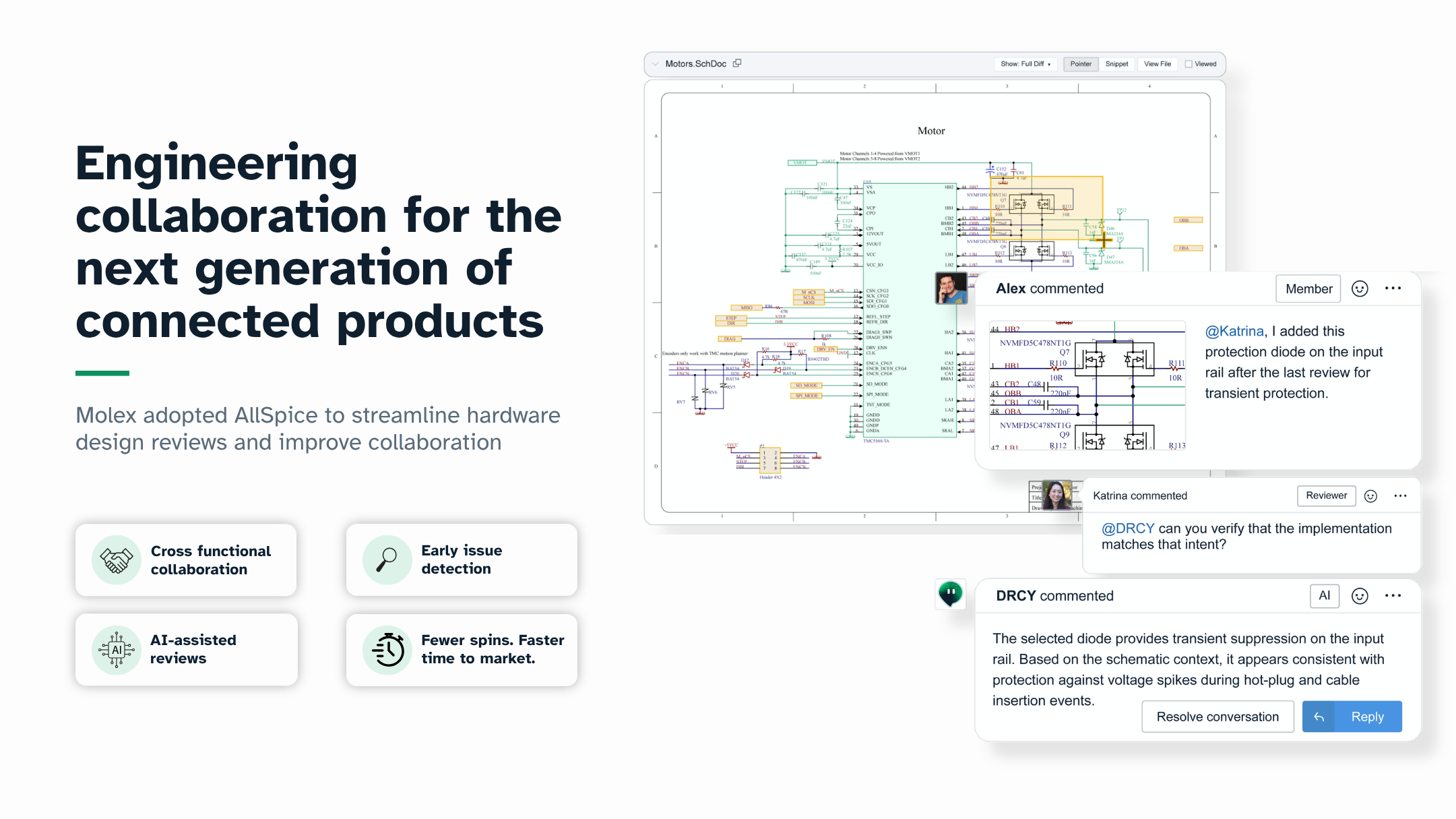
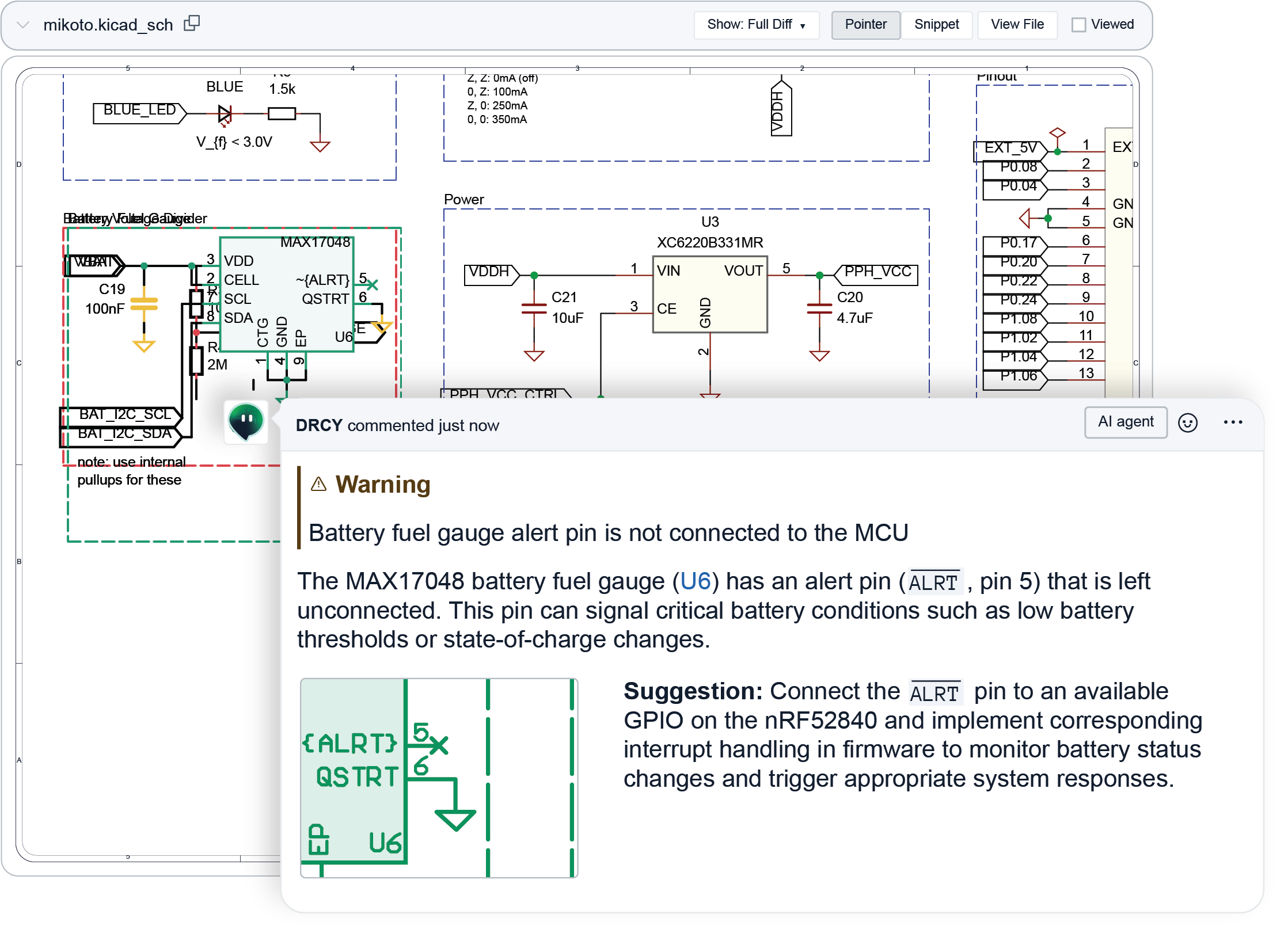
DRCY isn't a separate tool you export files to. It lives inside AllSpice, where your design reviews already happen: compare changes between versions, leave comments, and collaborate with your team.
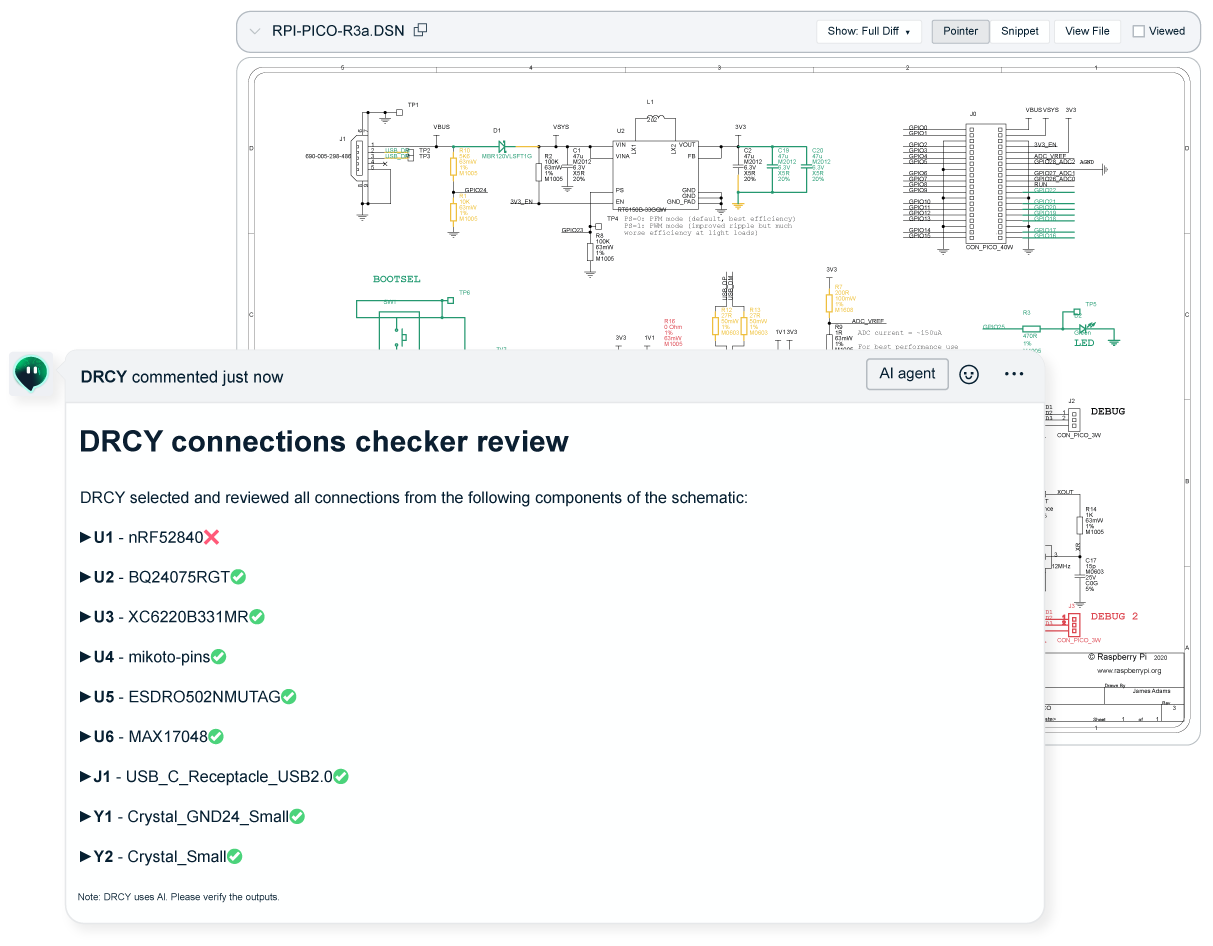
Getting your designs into AllSpice is easy. You can drag-and-drop files directly, or use a local client to seamlessly sync with your team for an iterative work/review flow. DRCY’s comments appear alongside feedback from human reviewers. No context switching or separate interface.
Think of it like adding a meticulous colleague to your design review who doesn’t get sloppy or distracted.
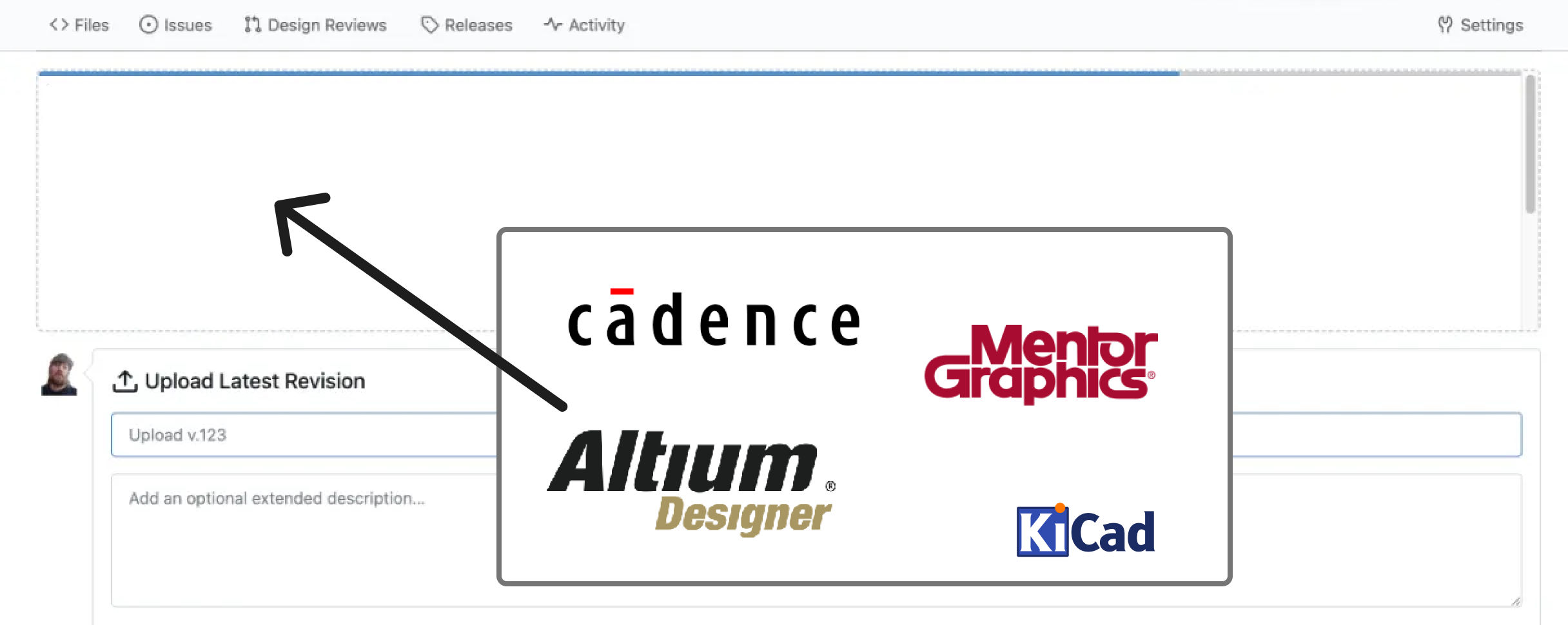
The snippet feature makes it easy to see the full context of DRCY's feedback. From there, you can escalate to an issue, resolve it immediately, or tag a collaborator for input. Analysis is even more powerful with a before-and-after comparison, so you don't waste time re-reviewing circuits blocks that have already been validated.
The power of native data access
Here's where DRCY differs fundamentally from general purpose AI tools analyzing your designs.
When you export a schematic to PDF or take a screenshot for an AI chatbot, you're throwing away most of the information that matters. An image shows shapes and text. It doesn't necessarily understand that this line is a net called VCC_3V3, that it connects to pin 7 of U4, or that U4 is a voltage regulator with specific input/output requirements. Compound that with more complex ECAD (Electronic Computer-Aided Design) data objects: busses, multi-channel sheet hierarchy, and design rules. You end up with a ton of ECAD-specific logic to reason about before an agent can start analyzing design intent. That adaptor layer is where AllSpice specializes.
DRCY sees what you see: nets, components, properties, hierarchy, and connectivity, with a schema specifically designed for AI reasoning. It works natively with Altium, KiCad, OrCAD, Allegro System Capture, DeHDL, and DxDesigner, with more formats on the roadmap.
This native access is why DRCY can catch subtle issues.
As one senior hardware engineer put it after a review:
"I was pretty impressed that it figured out there was a 5-volt output with a missing 'V' in the net name." - Sr. HW Engineer
That catch requires understanding net context and cross-referencing expected voltage levels, which is a lot more difficult to reason from pixels.
How DRCY reasons: an agentic approach
You may have heard "agentic AI" thrown around lately. Here's what it actually means for DRCY: rather than running a fixed analysis pipeline, DRCY decides what to investigate based on what it finds in your design.
When DRCY encounters a voltage regulator, it doesn't just check that the part exists. It will pull the datasheet to verify input/output voltage specs, trace the input net to confirm the source voltage is within range, check that output capacitors meet the recommended values, verify the enable pin is properly controlled, and much more. The path it takes depends on your specific design, not just a hardcoded checklist.
We call these capabilities "skills": specialized tools DRCY can invoke when needed. Think of it like having access to a well-organized reference library: DRCY can pull the right datasheet, cross-reference component specifications, trace signal connectivity, or apply domain-specific analysis heuristics: whatever the situation requires.
Current skills include:
- Datasheet parsing: Extracts and cites specs directly from component documentation
- Net connectivity analysis: Traces signal paths and validates connections and configurations
- Component cross-referencing: Checks compatibility between parts
- EE analysis guidance: Applies hardware-specific review patterns
"It's looking through data sheets, it's calling out really important pieces." - Sr. HW Engineer
We're actively expanding this skill library. And here's something we're excited about: these skills can leverage AllSpice Automations, our automation engine. Combining deterministic tests with AI reasoning lets you automate the routine checks while DRCY handles the nuanced analysis. More on that in a future post.
Context, not training
The question we get most often from engineering teams evaluating DRCY is "Are you training AI models on our designs?"
No. We don't train models on your data.
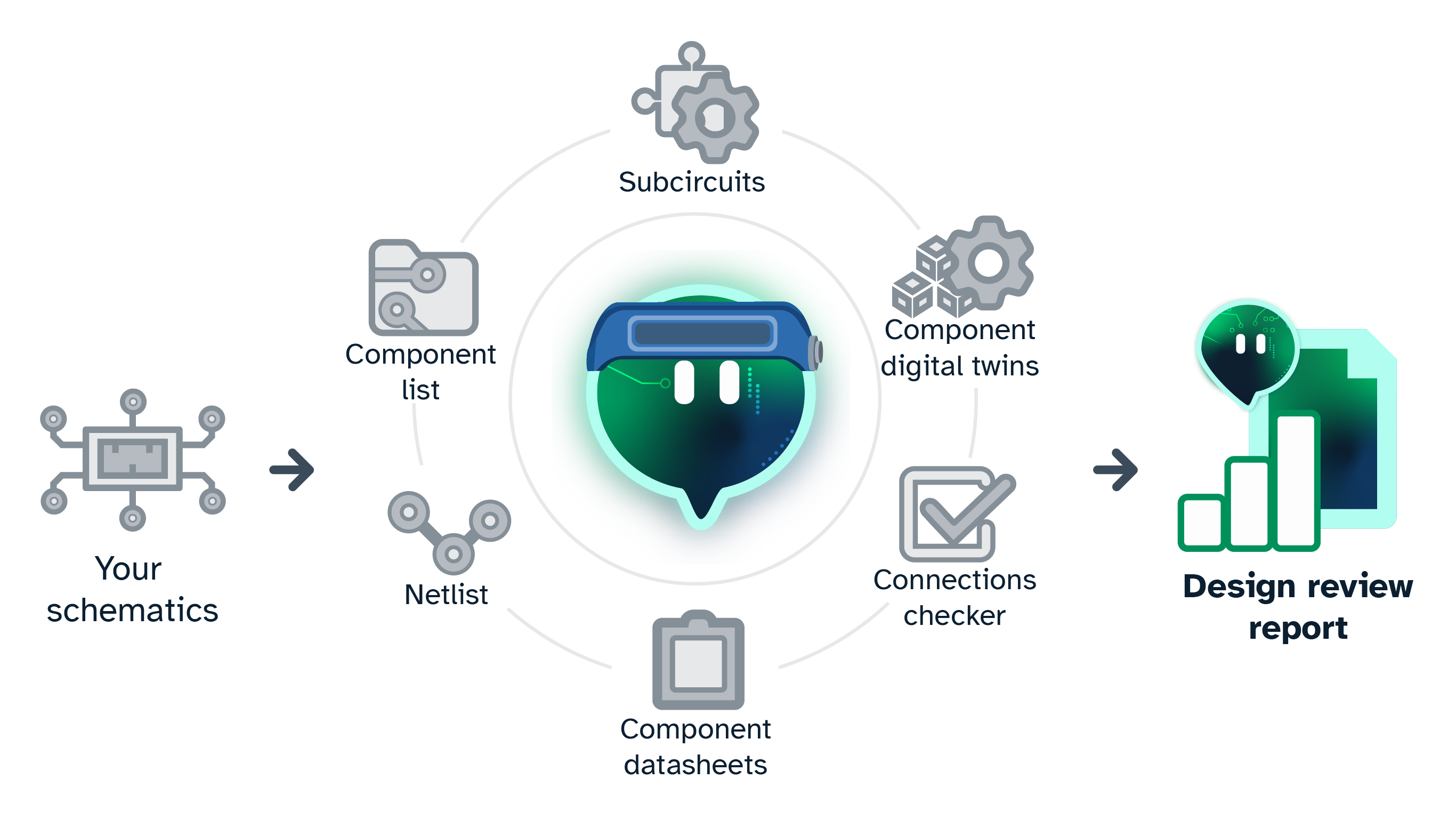
Instead, DRCY receives relevant context at review time. When analyzing your design, it's given:
- Your schematic data and component information
- Relevant datasheets for the parts you're using
- Your team's design review checklists (if you've configured them)
- Patterns from your past reviews
Think of it like going to the library to research a problem. Instead of memorizing all of the past context, DRCY pulls the references it needs, uses them, and leaves. Your IP stays yours and DRCY gets exactly the data it needs to make informed reasoning.
AllSpice is unique in its deployment flexibility to support customer security requirements, including support for NDA-restricted datasheets and designs stored in secure, access-controlled repositories. When available, DRCY can prioritize an internal datasheet library, or retrieve manufacturer datasheets and use engineer-uploaded, customer-specific documentation as needed.
Secure by design
Context handling is one piece of the security picture. Here's the rest.
All AI inference runs through AWS Bedrock, which provides complete isolation. Your data doesn't leave your security boundary, and it's never used to train foundation models. We've built DRCY on a zero-trust architecture from the start.
We also evaluate multiple foundation models and can customize the model selection based on customer requirements. This isn't one-size-fits-all. If your organization has specific compliance needs, we can work with you.
What's coming
DRCY today runs asynchronous design reviews, surfacing issues for your team to address. But that's just the beginning.
We're building toward an interactive mode where you can discuss your specific design context in real-time: ask follow-up questions, explore alternative approaches, and dig deeper into DRCY's reasoning.
We're also expanding DRCY's specialized knowledge. The goal is straightforward: make DRCY a more capable reviewer over time by connecting additional data sources.
The skill library will keep growing too, with tighter integration into AllSpice Actions and more automation capabilities.
DRCY is one part of a broader automation stack in AllSpice: AI reasoning, deterministic tooling, and the engineering artifacts your team already relies on. Because it’s built on AllSpice’s system of record, teams can keep automation transparent and auditable, with results grounded in real design context and supporting source material.
Try DRCY
Curious how DRCY would review your designs? Reach out to see how DRCY can accelerate your hardware development. We'd love to show you what it can find.