Why Git is good for hardware development
Git has become an essential tool in modern software development workflows, providing a robust and flexible foundation for version control and collaboration. But, it's not limited to just code. It is also used for versioning and tracking changes in various types of files and projects, including hardware development.
Git has proven to be valuable in hardware development for several reasons:
1. Revision control
- Git excels in tracking changes to files over time. In hardware development, maintaining version control is crucial for managing revisions of hardware designs, schematics, and other project files. Versioning enables electrical engineers to roll back to previous versions, compare changes, and collaborate effectively.
2. Collaboration and teamwork
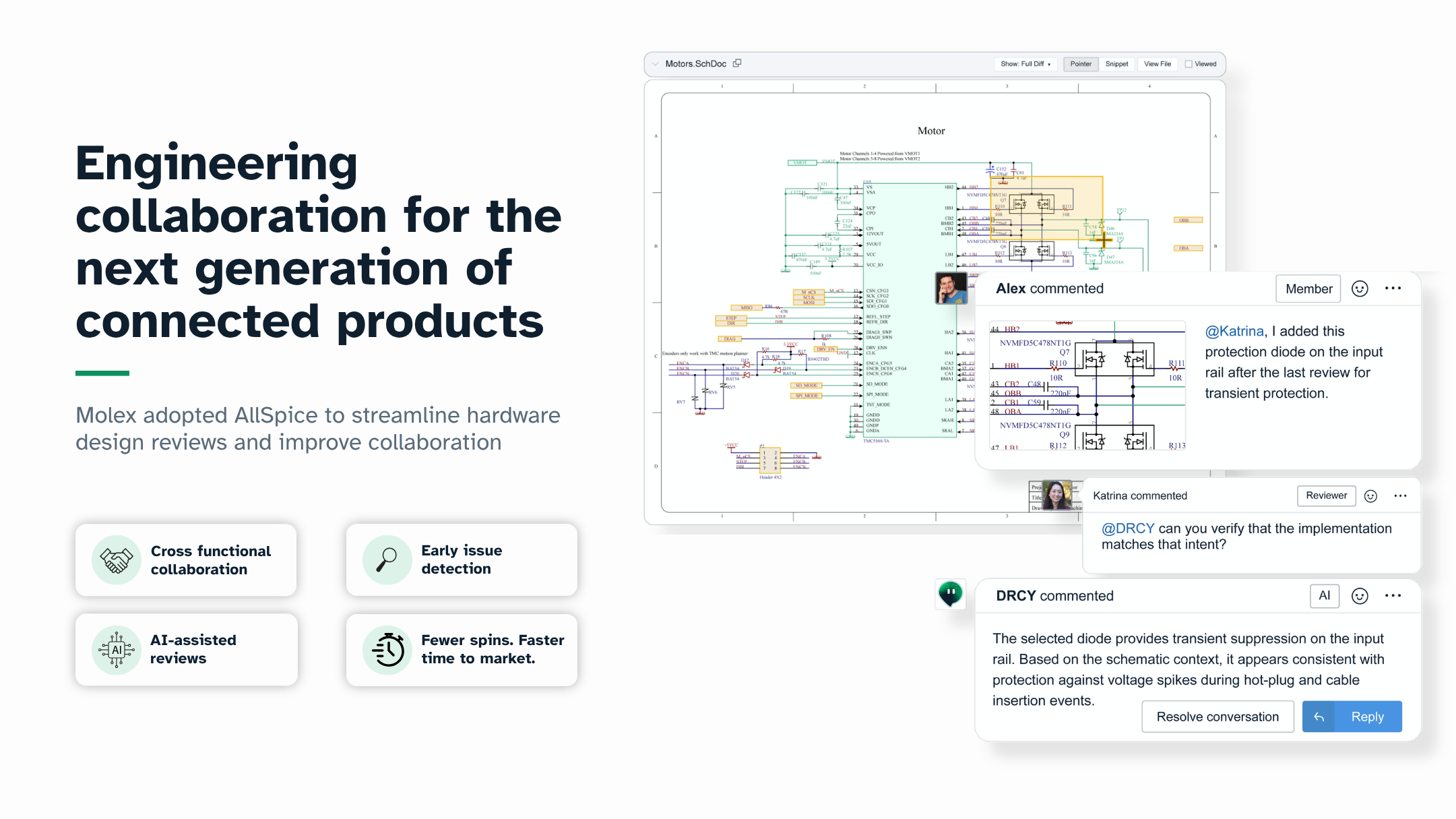
- Hardware development often involves collaboration among multiple teams and team members. Git provides a distributed version control system that allows team members to work on their local copies of the project and synchronize changes seamlessly. This type of collaboration facilitates parallel development efforts and reduces conflicts.
- Easily incorporate working with software or firmware teams that already use Git for development.
- Enable outside collaborators or stakeholders to view designs.
3. Branching and merging
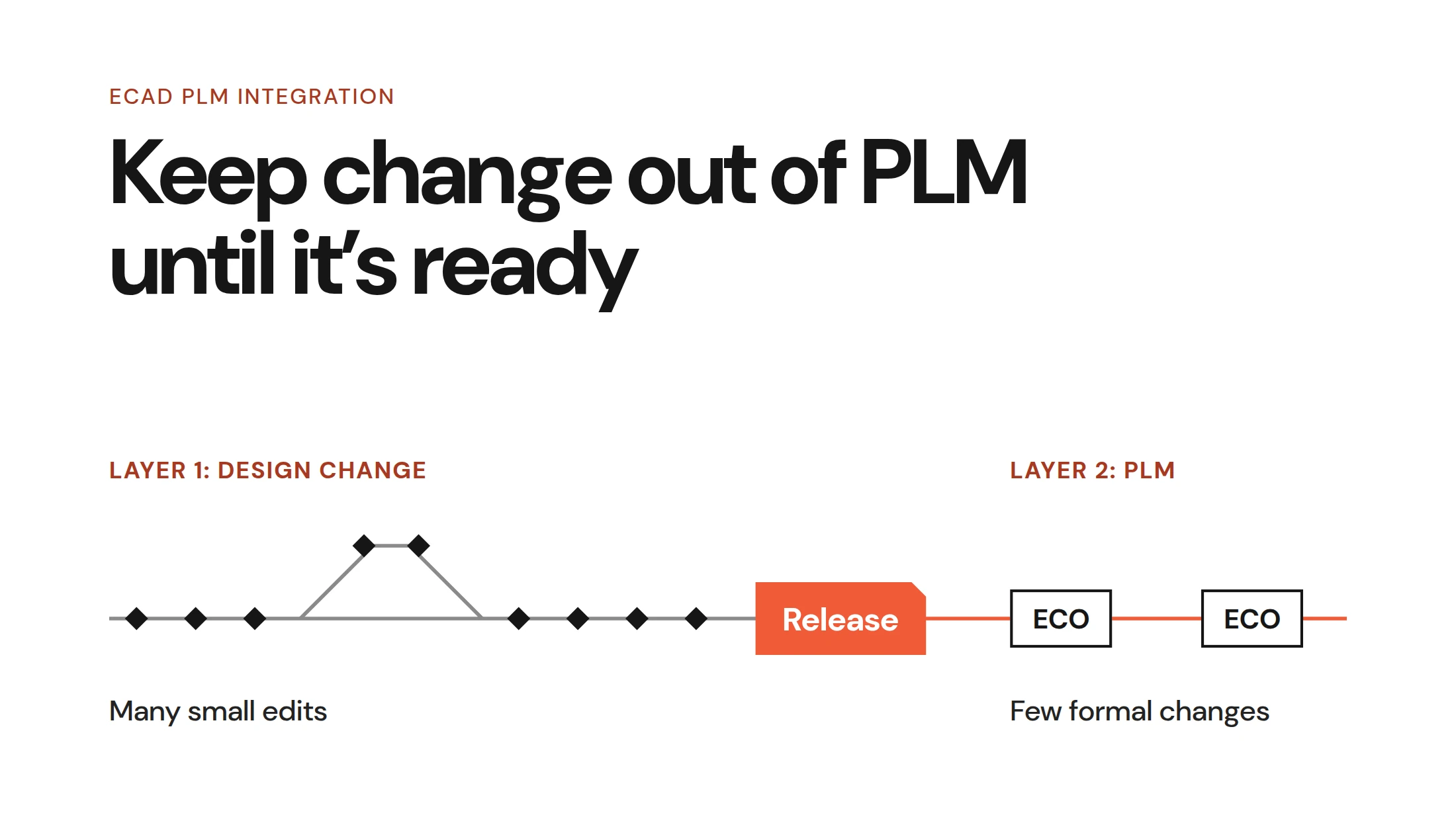
- Git’s branching and merging capabilities are particularly beneficial for hardware development. Teams can create branches to work on specific features or improvements independently, and later merge these branches back into the main project. This helps in managing complex hardware development workflows without disrupting the main project.
4. Traceability and documentation
- Git commits serve as a log of changes made to the project, providing a clear and traceable history. This history is invaluable for understanding why certain design decisions were made, tracking the evolution of the project, and reviewing the development process. It acts as a form of documentation for the hardware project.
5. Parallel development
- Hardware projects often involve multiple components or subsystems developed in parallel. Git allows teams to manage these parallel developments efficiently. Different teams or team members can work on separate parts of the project simultaneously without interfering with each other’s work.
6. Integration with CI/CD systems
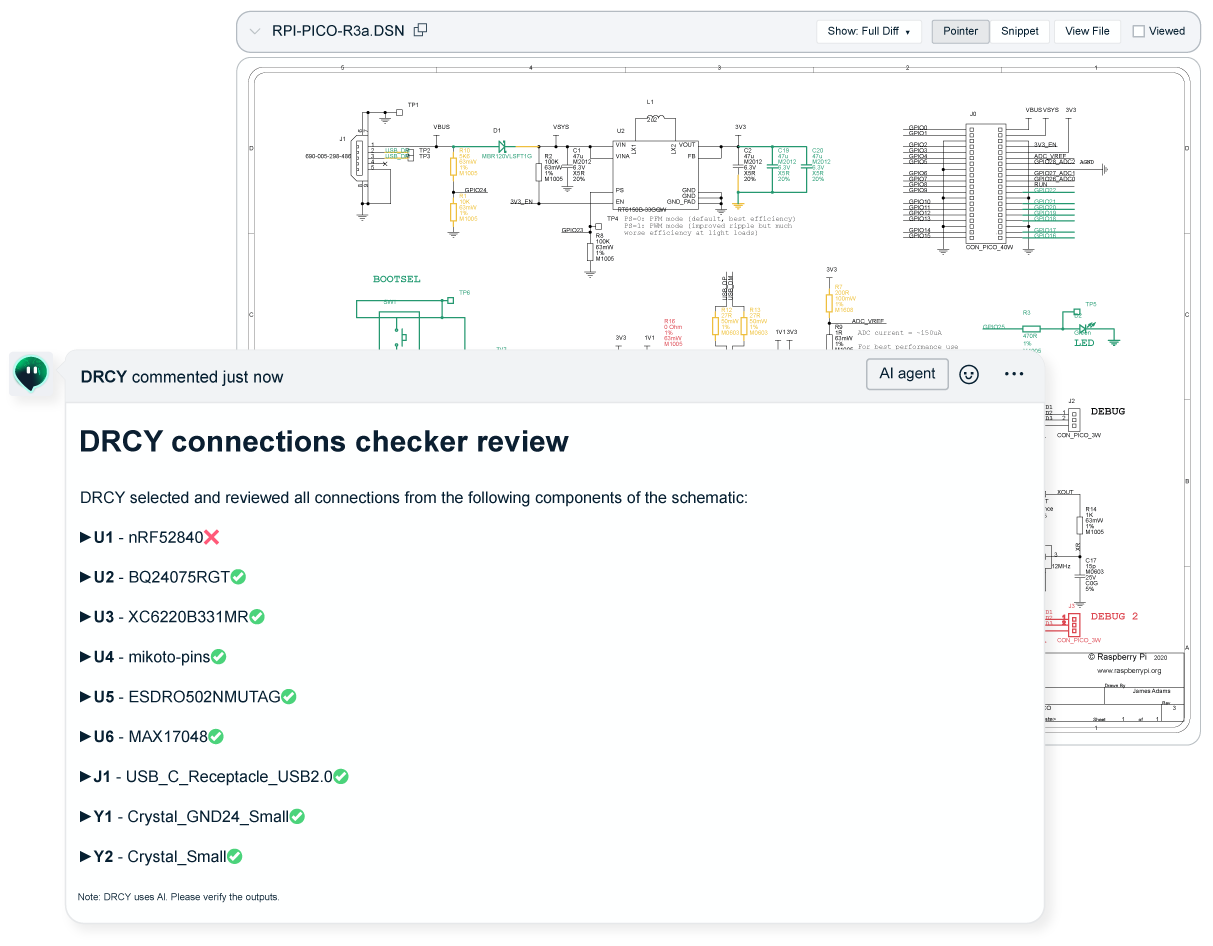
- Continuous Integration (CI) and Continuous Deployment (CD) are practices that aim to automate the testing and integration of changes. Git seamlessly integrates with CI/CD systems, allowing hardware developers to do things like automatically generate BOMs or run parts checks, ensuring the reliability and functionality of hardware designs as changes are made.
7. Support for binary Files
- Hardware projects frequently involve large binary files such as ECAD files, images, and other non-textual data. Git handles binary files efficiently, ensuring that changes to these files are tracked, and versions can be managed effectively.
8. Open source collaboration
- Many hardware development projects involve collaboration with the broader community or are part of open-source initiatives. Git is well-suited for open-source collaboration, enabling contributors from around the world to contribute to hardware projects, report issues, and propose improvements.
Conclusion
Git’s versatility in version control, collaboration, branching, and merging, combined with its adaptability to handle binary files, makes it an excellent tool for managing hardware development projects. Its widespread adoption and support also make it easier for hardware development teams to integrate Git into their more modern, streamlined workflows to improve efficiency.