Automating the checklist: Reducing part library review bottlenecks
Part libraries are foundational to hardware design, and engineers rely on accurate symbols and footprints for schematic capture, PCB layout, and manufacturing. For many organizations, reviewing and approving those libraries falls to a small team of CAD librarians. As engineering organizations scale, however, that team can become a major bottleneck.
One large aerospace organization experienced this firsthand. Just five librarians supported more than 400 hardware engineers, reviewing requests for new parts and revisions against an exhaustive checklist of requirements and design standards. The queue grew to hundreds of requests, with new requests sometimes waiting up to a month for review.
After working with Allspice to automate deterministic checklist items, their engineers were able to get feedback earlier while allowing librarians to focus on tasks requiring higher-level engineering judgment. Keep reading to see how the workflow was built and how it helped cut the review queue in half.
What is a part library review?
Part library review involves checking components (parts) for accuracy and consistency against the organization’s requirements before they’re approved for use. Librarians compare ECAD data against datasheets, internal design standards, manufacturing requirements, existing library conventions, and component lifecycle or sourcing information.
Part reviews cover a few key areas:
- Symbols: Verifying pin count, pin names, numbering, orientation, and other symbol properties against the manufacturer’s documentation.
- Footprints: Checking pad dimensions, hole sizes, annular rings, layer assignments, silkscreen, courtyard, and component orientation against applicable design and manufacturing requirements. Industry standards like IPC-7351 provide guidance for surface-mount land-pattern geometry.
- Part data: Confirming the manufacturer part number and associated properties are accurate and consistent with the source documentation.
- Lifecycle status: Checking whether the component is active, not recommended for new designs (NRND), or approaching end of life. Manufacturers use these statuses to communicate whether a component is appropriate for new designs and whether discontinuation is planned.
- Library conventions: Verifying that naming, formatting, visual styles, and other organization-specific standards are followed consistently across the library.
- Sourcing and approved alternatives: Verifying that sourcing information and approved alternates are associated with the part so teams can make informed purchasing and substitution decisions.
While the exact checklist for a part review varies by organization, the underlying goal is the same: make sure every part is accurate and meets organizational standards. An error at this point has a high likelihood of causing downstream issues. In practice, this means the review stage requires verifying information across multiple sources and repeating the same exhaustive checks for every new part or revision in order to prevent errors.
Why part library errors are so expensive
A part library error doesn’t just stay in the library. It flows into the schematics and layout, then into fabrication and assembly, where each step makes the mistake harder and pricier to undo. The challenge is that errors caught late due to incorrect part designs can mean re-spins and added cost, plus weeks of schedule delay. Catching a component issue at the symbol stage is a two-minute fix. The same component issue caught at assembly can scrap a batch of boards.
Scaling a manual checklist
Manually reviewing libraries depends on people working by hand in meetings and spreadsheets. While that might work for a handful of parts at a small company, it quickly breaks down as libraries grow into the hundreds or thousands. And consistency is the hardest part of manual review. Picture a tired reviewer at the end of a long day running the same checklist on repeat. Critical items are bound to slip through the cracks.
The effort is also real. One estimate put the time to build, review, and approve a high pin count symbol and footprint at 8-16 hours. Without a large team of librarians to support that kind of workload, a backlog is inevitable.
The hidden cost of a bad footprint or symbol
A wrong pad size or a swapped pin can pass schematic review untouched, but the problem often surfaces at assembly, when the part doesn’t fit or won’t connect. That kind of bill adds up fast. Even a single mismatched footprint can result in weeks of delay, $20,000 in lost production, and potentially losing client relationships.
Compliance and traceability matter more in regulated environments
In highly regulated industries like aerospace or medical, documented design controls are a requirement, and noncompliant parts can trigger additional review before moving the design forward. A 2026 survey found that 62% of teams only discover compliance violations after the design phase, when remediation costs are significantly higher.
That makes traceability important from the start. Teams need to know which part, revision, requirements, and source data were reviewed and approved. Catching a noncompliant library part before it reaches the design gives engineers an opportunity to correct the issue earlier, before it creates downstream rework or complicates the approval process.
Managing end-of-life and obsolete parts
A part that’s valid today can go end-of-life (EOL) tomorrow. Manufacturers are supposed to warn customers with a Product Change Notification (PCN), but waiting for those notices can be risky. Z2Data reported that out of 620,000 components discontinued in 2025, only 52% of those EOL events were communicated through a manufacturer PCN.
The redesigns that follow can be expensive. Z2Data also estimated that the cost of redesigns triggered by part obsolescence could range from $20,000 up to nearly $2 million. The practical fix is of course to check lifecycle status inside the library before reaching layout. That way, component changes can be reviewed as they happen and keep obsolete parts out of new designs entirely.
Finding the automation opportunity
When Allspice collaborated with the large aerospace organization in this case to develop a solution for library review challenges, they started with 2 key considerations: what were librarians already checking manually, and what did the existing approval process flow look like.
The checklist
The checklist below was given as a subset of the organization’s typical part review process, covering everything from component metadata and schematic symbols to footprint geometry, standards, and 3D models.
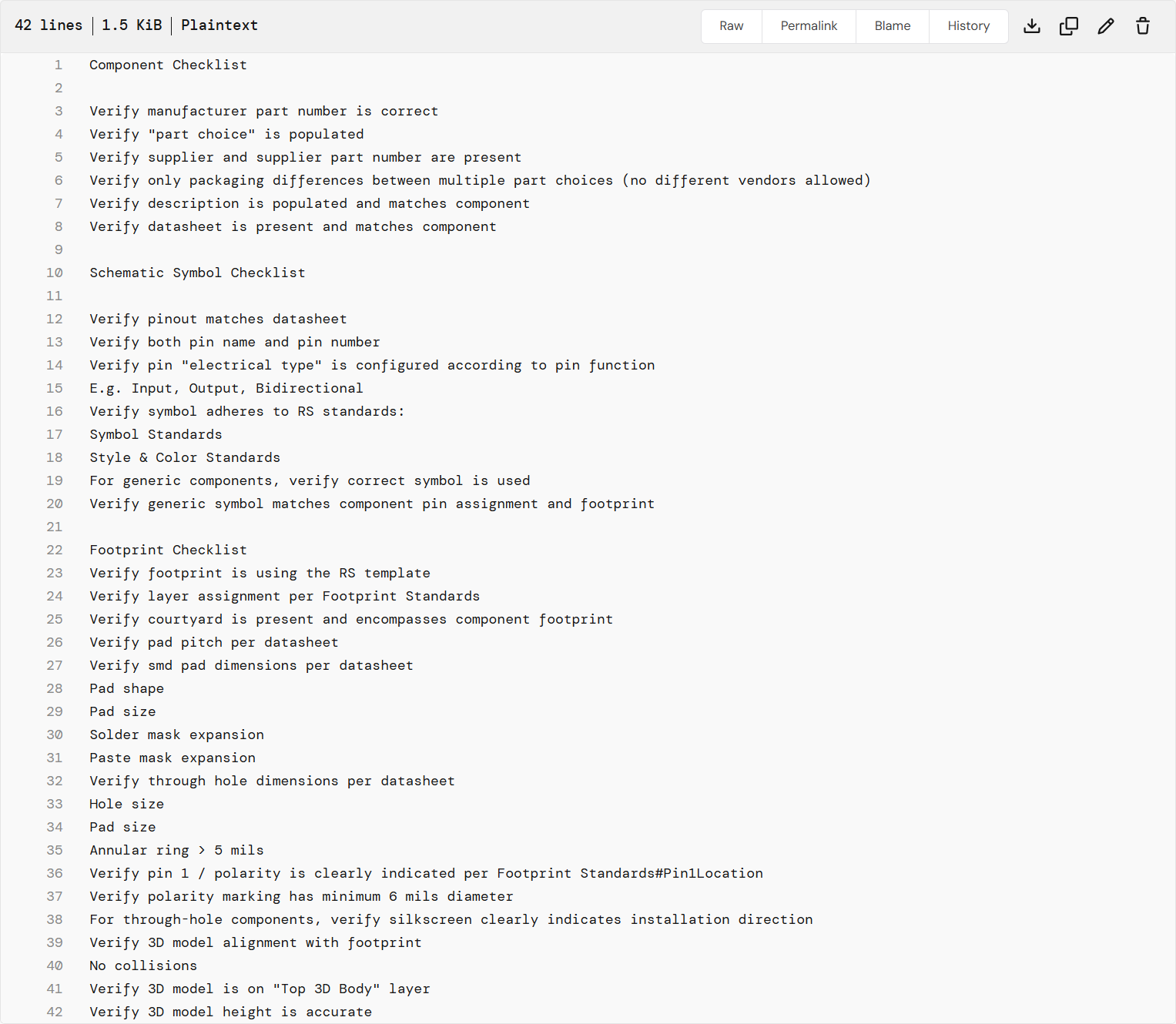
Many of these checks required cross-referencing information across various sources and documents, some of which could get quite in-depth. For example, an internal symbol standards document specified particular formatting for a MOSFET:
- Name based on channel type, mode, pin count, and configuration
- Specific pin lengths, grid spacing, electrical types, and pin numbering conventions
- Part-specific pins each having a number and designator
- Thermal pads having their own symbol pin
- Symbols with different pin assignments depending on whether a package shorts multiple pads together
Details like those highlighted the need for automation, but the key was understanding the best approach.
Starting with deterministic checks
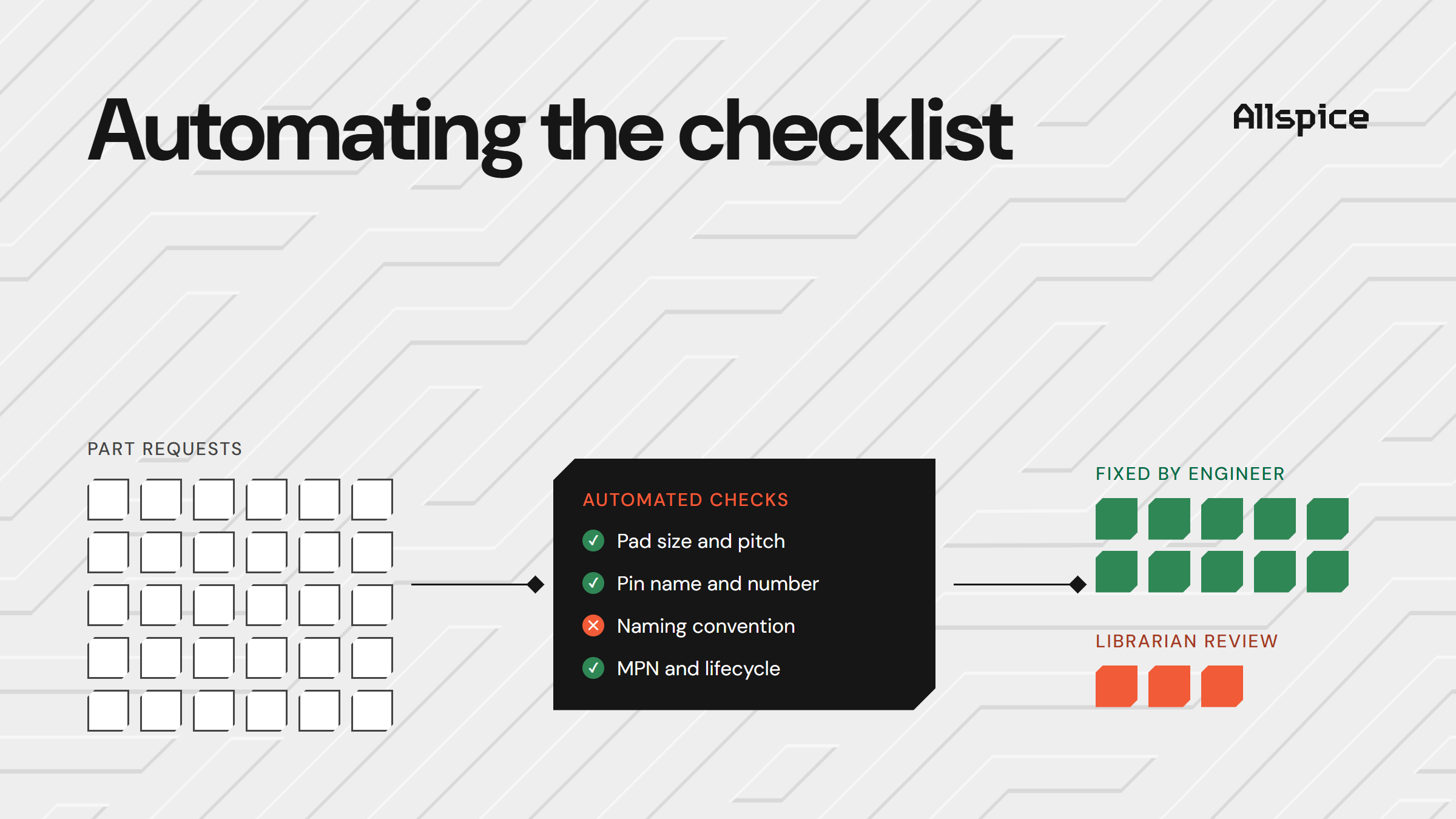
Some items in the checklist lended themselves well to automation in Allspice because they could be evaluated using information already contained in the design files or associated metadata. These are called deterministic checks: rules that evaluate the same inputs against a defined condition and produce a consistent result (like pass or fail) every time. Any checks that require information outside the design files, like interpreting a datasheet or applying engineering judgment, are less suited to this kind of automation.
A concrete example helps. A deterministic rule could require that every part has a manufacturer part number and a lifecycle field, plus a linked footprint. Any part missing one of those fields fails the check automatically. Here’s the breakdown of which checks could be be evaluated deterministically:
Deterministic:
- Geometry/dimensions: Annular ring, pad size, pad pitch, hole size, distances
- File metadata / properties: Manufacturer part number matches, part choice populated
- Symbol/footprint structure: Pin name + pin number present for each pin
- Style/convention checks when the rule is explicit: Naming conventions, color conventions, pin numbering format
- Anything derivable from parsed ECAD data
Non-deterministic:
- Checks that depend on datasheets
- Checks requiring engineering judgment or interpretation
- Anything resulting in a gray/needs review state
Deterministic rules scale better than people. Once a check is written, it runs on part one and part ten thousand the exact same way, at no extra cost per part. And because rules don’t change on their own, they can run on every library change. Teams can automate component validation checks so each new or edited part is checked the moment it’s committed.
Building a better process
The organization's original workflow used two repositories to separate preliminary parts from approved production parts.
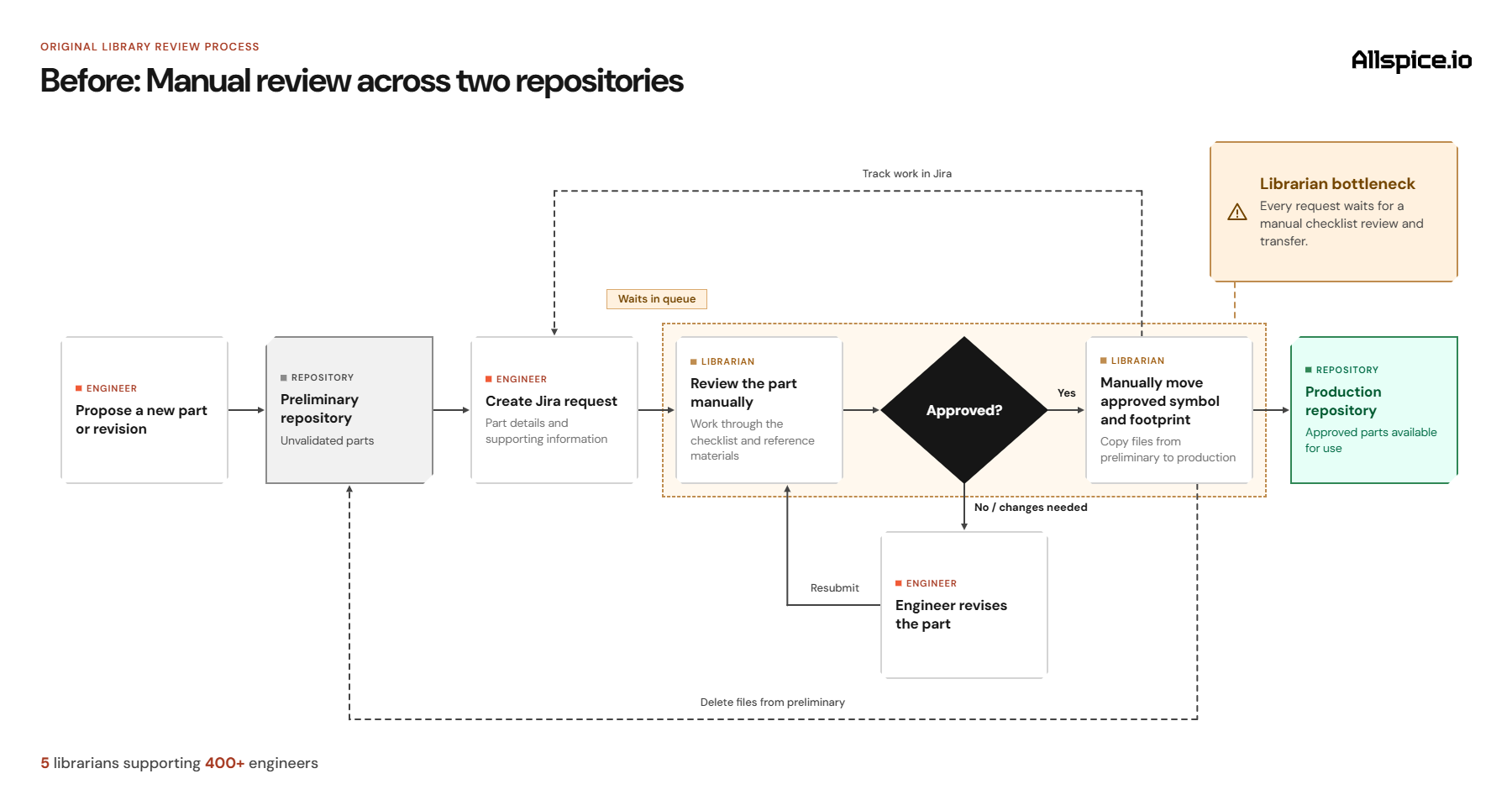
An engineer could propose a part or revision in the preliminary repository, then create a Jira ticket with all the details about the request. From there, a librarian would review the part request (time for the checklist). If approved, the librarian would manually clone the part onto their local computer before pushing it into the production repository. Not the most efficient way of doing things.
In theory, this strategy made sense: there was a clear separation between development and production, and only librarians had permission to push to production. However, this also meant that essentially every request was bottlenecked by a librarian, and completing the full manual workflow was required before engineers could receive any feedback.
The automated approach in Allspice changed where those checks happened.
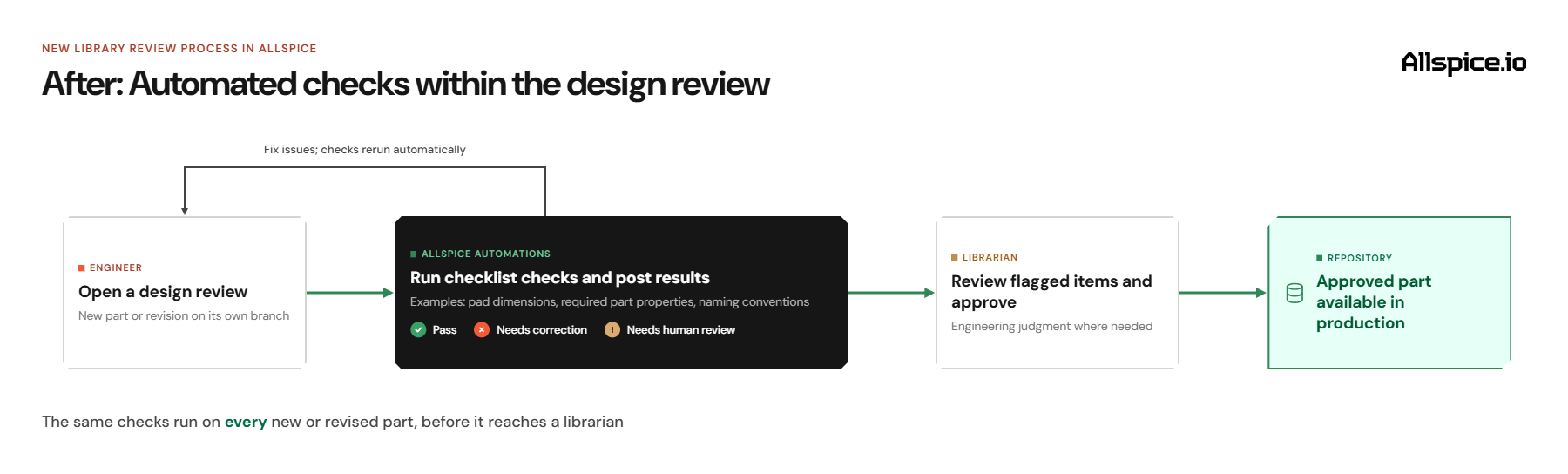
In the Allspice workflow, a new part or revision was submitted through a new branch and design review. Opening or updating the design review triggered the automation, which ran the company’s configured checklist against submitted part designs.
From automated checks to real results
The new workflow was built with Allspice Automations. A design review for a new part proposal or update could trigger that workflow, which then ran the configured checks and posted results back to the review. Engineers could see the findings right alongside the part they submitted.
A library review in action
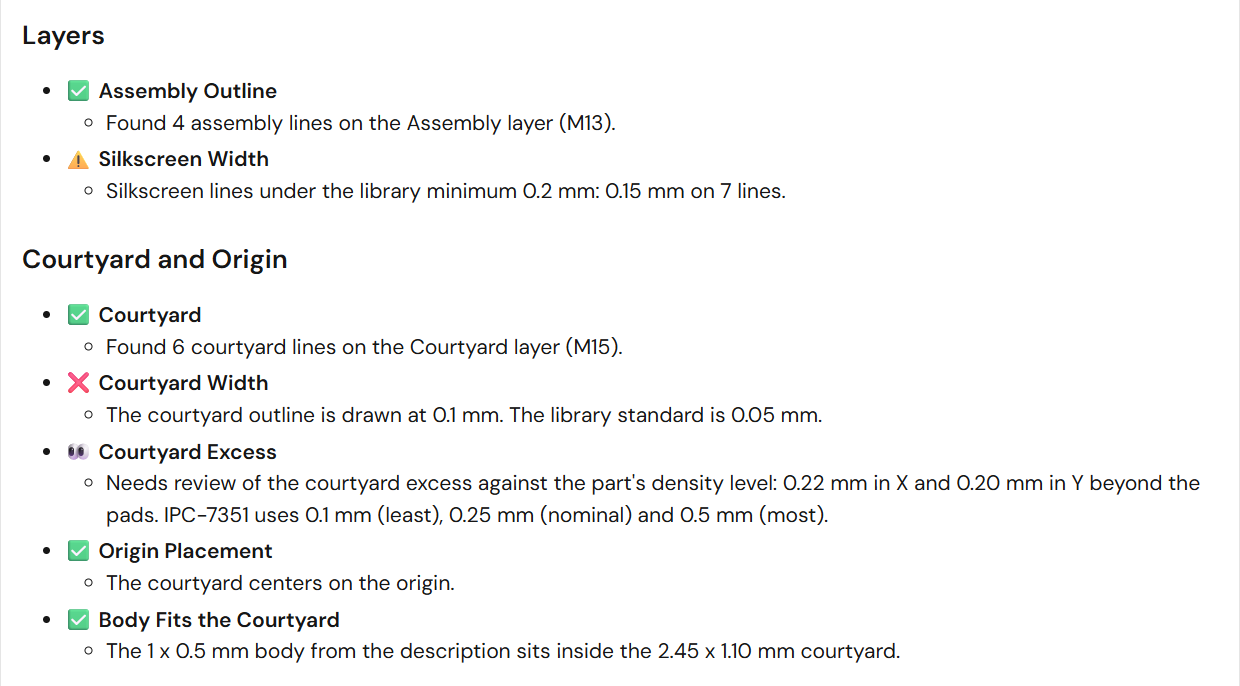
Let’s look at an example. An engineer submits a new 0402 resistor for review.
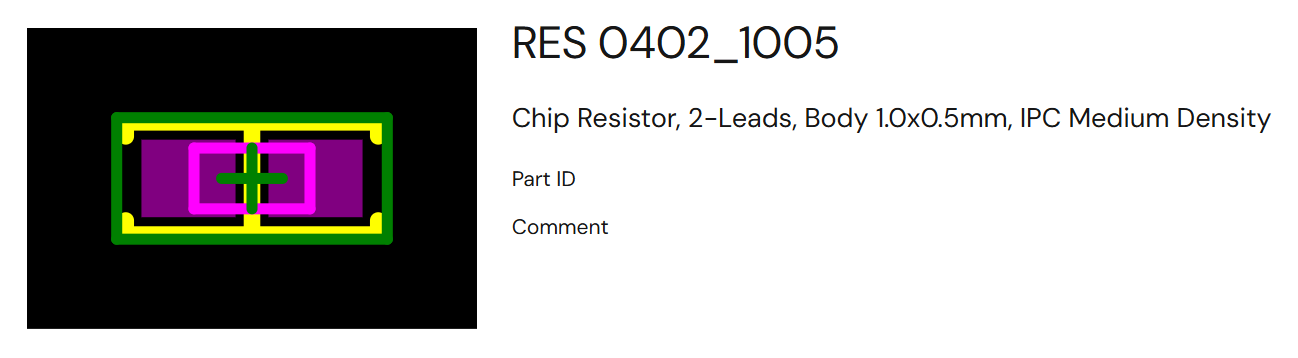
The automated review checks the footprint against the organization’s library standards. In this case, the assembly outline, courtyard, origin placement, and body fit all pass. But the review catches two issues: silkscreen lines below minimum, and an incorrect courtyard outline width. The courtyard also gets flagged for extending beyond the pads.
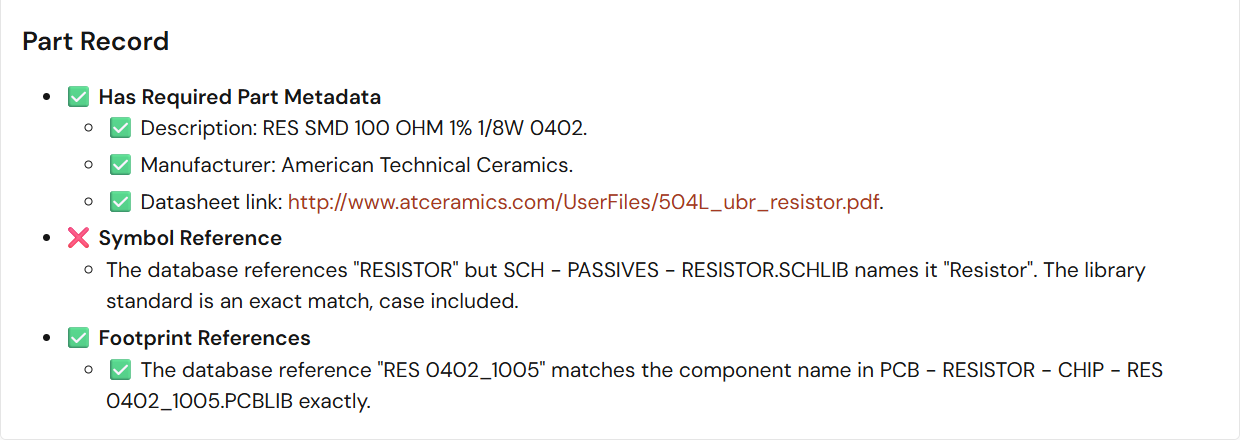
At another point in the review, the part record is checked as well. Everything looks good except for the symbol reference. Organizational standards specify RESISTOR, but the library file uses Resistor. The library standard requires an exact match, including capitalization.
Any other kinds of checks can be automated just like this. Automations are flexible in allowing Allspice users to streamline their particular workflows. In the case of our large aerospace company, building those automations for their workflow had an immediate impact.
The difference in practice
The value of the workflow for the company came from what happened across hundreds of part requests. Each new or revised part got the same checks before reaching the librarian. Engineers got immediate feedback on issues they could fix themselves, while librarians spent their time on findings that needed engineering judgment.
Several benefits were clear after developing an automated part library review flow:
- Reduced the queue: The aerospace organization expected to cut its review queue by about half within a month, giving engineers faster access to approved parts and revisions.
- Shifted checks left: Engineers got feedback as soon as they submitted a new or revised part. They could fix issues while the design was still in their hands, before the request reached a librarian.
- Lightened the manual librarian workload: Librarians no longer had to perform every repetitive check or manually move approved parts between repositories. The workflow handled those routine steps automatically.
- Accelerated review cycles: Librarians could focus on reviewing the automated results and investigating gray or ambiguous findings that required engineering judgment.
- Lowered the risk of mistakes: The same checks ran against every part, reducing the chance that a repetitive checklist item would be missed. This mattered for a small team handling requests from hundreds of engineers.
- Improved compliance in regulated environments: A repeatable review process helped the organization apply its library requirements consistently and identify potential compliance issues earlier.
The automated results also made it easier to see where a review still needed a librarian’s attention. That distinction became especially important when a checklist item required more than a straightforward pass or fail.
Keeping humans in the loop
Automation handled checks with clear rules, while librarians handled findings that required context or engineering judgment. A courtyard width can be measured against a defined standard and marked pass or fail. A check that depends on a datasheet or how a component should behave in a specific application may need a librarian to investigate further. The automated workflow in Allspice was able to flag those cases for review instead of forcing a binary result.
That division of work gave librarians more time for the decisions that required their experience. Engineers could fix straightforward issues before submitting a part for approval, while librarians focused on the findings that needed a closer look. Automation handled the repetitive checks. The librarian remained responsible for the final decision.
A better way to handle part library reviews
For a five-person library team supporting more than 400 engineers, every repetitive check added to the review queue. Automating the checks that followed clear rules gave engineers feedback earlier and gave librarians more time to focus on the requests that needed their expertise. And the results for the organization were clear.
However, there’s still more checklist that can be automated. Non-deterministic checks depend on information outside the design files, such as datasheets or requirements based on engineering judgment. As those capabilities develop at Allspice, even more of the review process could move earlier in the workflow. The result being a continuous, comprehensive part library review process to give teams faster feedback, allowing them to focus their time where it matters most.
Find out more about how to set up Allspice Automations and how the hardware design review platform fits your library workflow. Have a question about your own review process? Ask us anything.