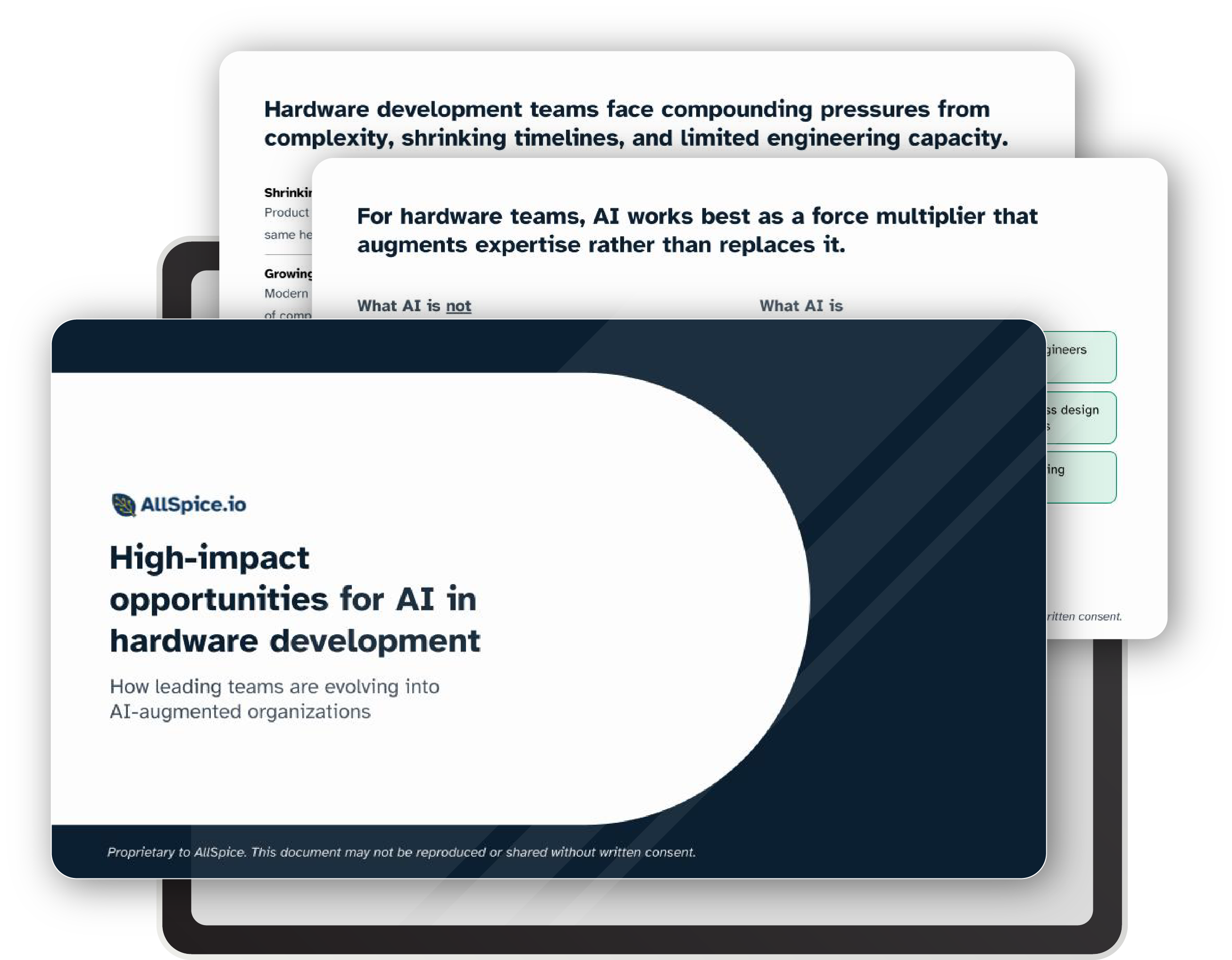
ROI for AI in hardware design reviews

$700K in engineering efficiency. $546K in automation value. $810K in re-spin prevention. One example F-500 hardware company's annual calculation, with the math to run it for yours.

The ROI case for hardware engineering leaders who need a defensible number before the budget conversation. Three value categories, transparent inputs, math you can apply to your own numbers.

Share:
You need better tooling and a number that survives the budget conversation

Most hardware engineering leaders already know their teams need better design review workflows. The reviews take too long. Senior engineers are bottlenecked. The same categories of errors keep escaping to fabrication.

The gap isn't conviction. It's a defensible number they can put in front of leadership without overselling. This framework provides that number.

Before

After

⚠️ Reactive error discovery. Issues caught after fabrication.

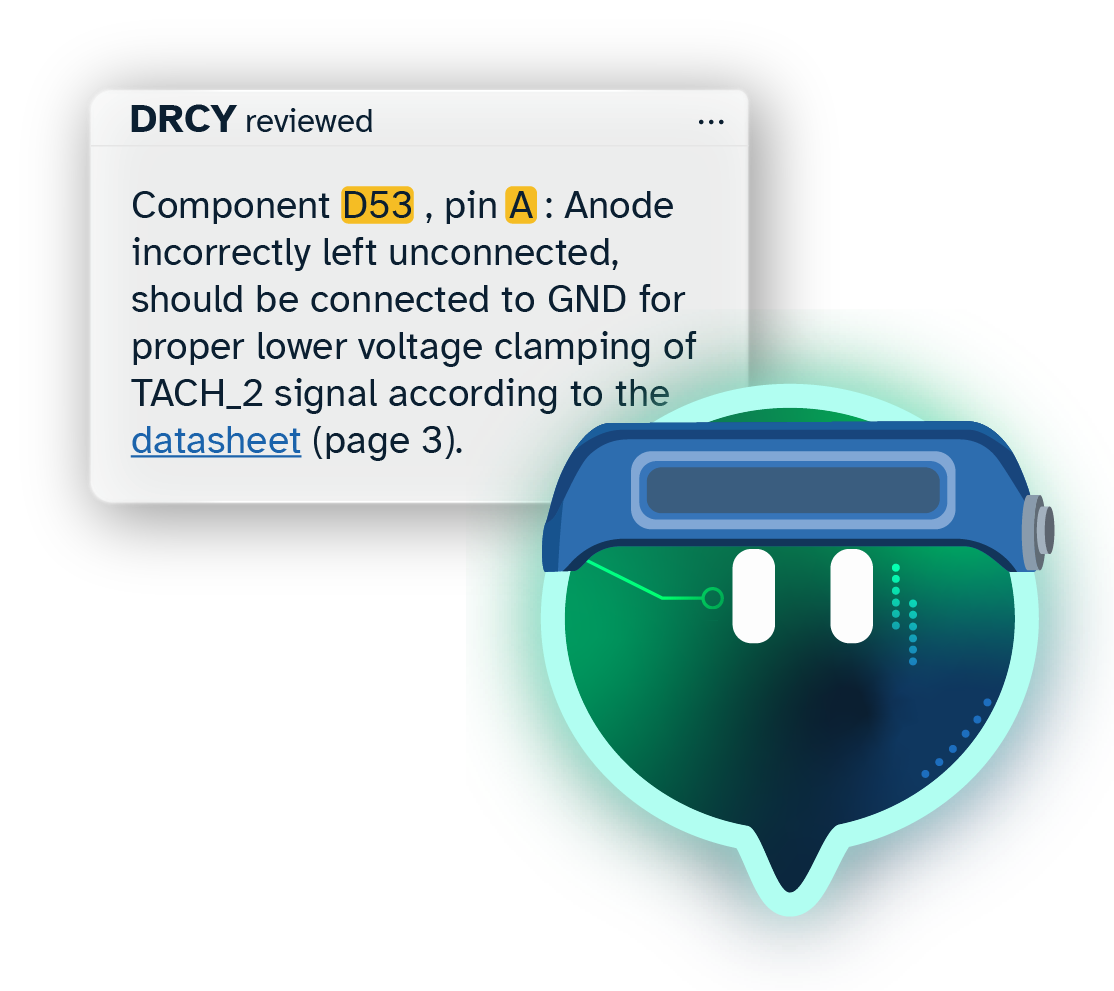
✅ Early identification: AI agents flag issues before sign off.

$810K in re-spin prevention

Engineering efficiency: $700K/yr

5,000 review hours recovered annually. Calculated from 200 reviews per year, 25 hours saved per release, $140/hr loaded engineering cost. AI handles first-pass checks; engineers focus on architecture and trade-offs. Same headcount, more throughput.

Re-spin prevention: $810K/yr

18 board re-spins prevented at $45K each. 72 weeks of schedule delay prevented. Calculated from 250 releases with 7% historical error rate. Direct cost reduction and schedule risk removed.

Automation value: $546K/yr

3,900 hours of tracking work eliminated. Calculated from 300 boards managed, 15 minutes per board per week, 52 weeks per year. Status updates, version reconciliation, and change documentation automated. Work you can stop paying engineers to do manually.

Three value categories, documented

Engineering efficiency: review hours recovered at loaded engineering cost. Automation value: tracking work eliminated across the board portfolio. Re-spin prevention: re-spins prevented at cost per incident. A complete business case includes all three categories. The briefing provides the calculation for each, with transparent, documented inputs.

Access the full briefing

For engineering leaders who need the business case, not the technology pitch. The calculation, documented so you can apply it to your own team.