Digital design reviews are moving beyond the conference room
Hardware engineers are all too familiar with what in-person design reviews look like. As engineering evolves, however, they are being replaced by asynchronous collaboration on a platform. Here’s why many in-person meetings are being replaced by digital design reviews.

Shift in-person to a-synchronous collaboration
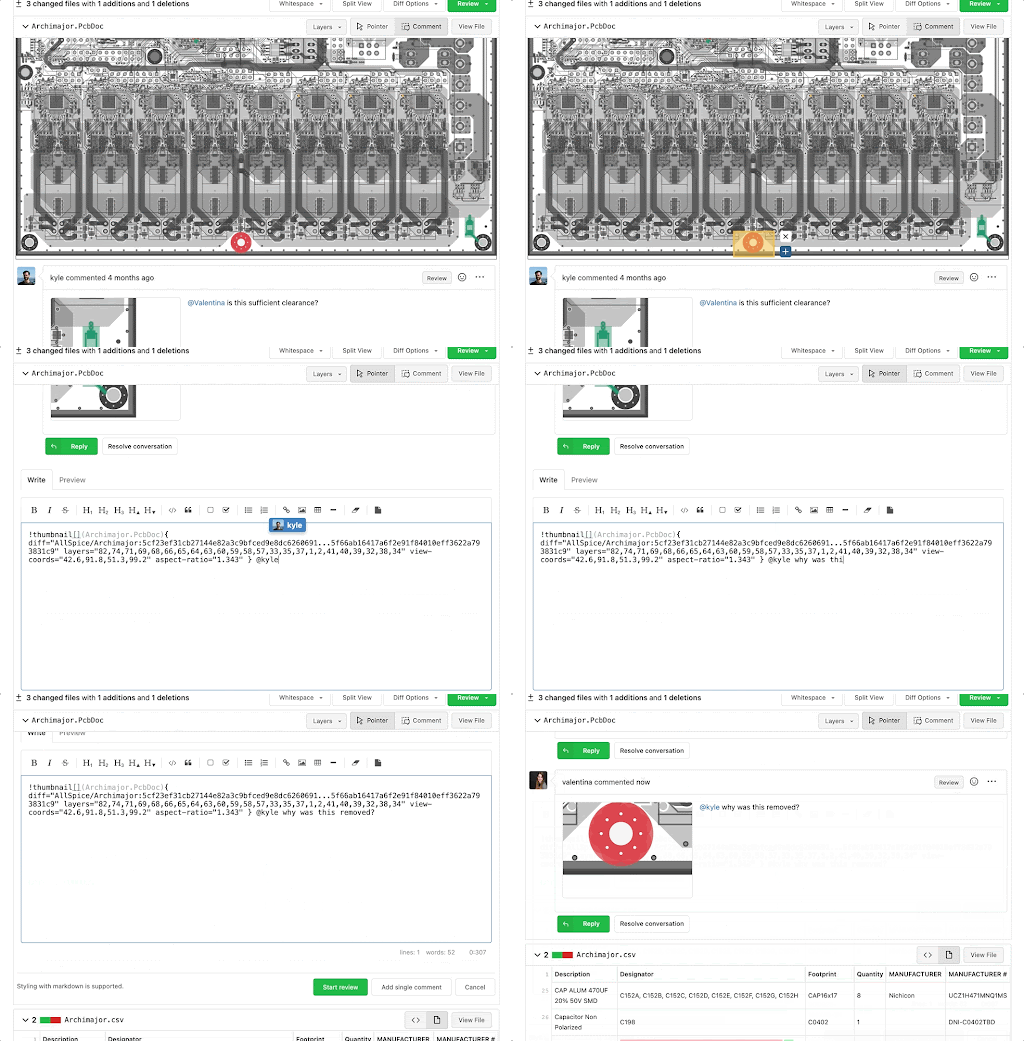
In-Person design reviews are solely dictated by whenever all of your team member’s calendars align. Digital design reviews, on the other hand, allow everyone to share their feedback on their own time. This can reduce hastily made decisions, inaction, and groupthink.
Colleagues are increasingly spread across different time zones, work arrangements, and obligations. You might be stuck waiting a few weeks for people’s schedules to align to even just begin the review process. By being asynchronous, you can begin at any time. Although you may be ready to lead the design review on the East Coast at 7 AM, your West Coast team members may not share your enthusiasm at 4 AM their time.
Minimize wasted time writing documentation
Once an in-person review is over, people return to their desks to write. This usually needs to happen after the review. People dislike these lengthy notes about the meeting and further documenting how to troubleshoot what issues were discussed. On top of this unnecessary documentation, your team is also writing action items and talking points for the future meeting.
Avoid repetitiveness
Without a process in place, design reviews often become ad hoc and disorganized. Some team members may send duplicate comments because they lack visibility of previously provided feedback. Even worse, items may be completely overlooked through this disorganization or by someone simply forgetting to provide feedback during the review.
Unify your teams and prevent waste
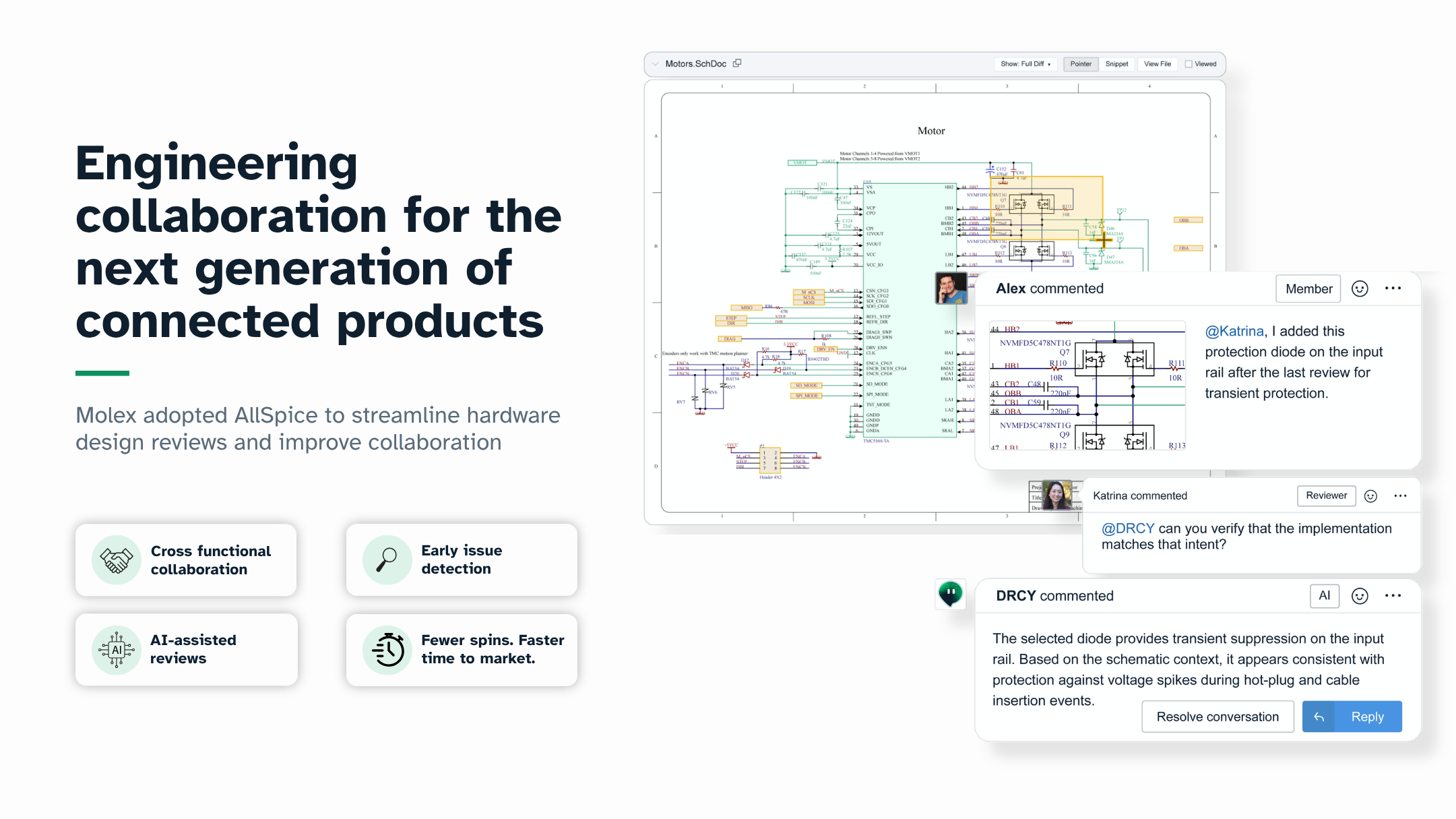
It may be more of a challenge to connect with certain colleagues who can add a lot of value to the design review process. Despite hardware being interdisciplinary by nature, many teams often remained siloed. Digital design reviews provide visibility into these silos and bring teams closer together.
We’ve all been there when a prototype board arrives from the factory and it doesn’t work. There was a last-minute change to a component that was EOL, but the notification fell through the cracks of your teammate’s inbox. Catching the change on time would have saved that additional $10k in prototypes and over a month of work re-spinning a board.
By collaboratively going through a full design review cycle, ordering, and testing, the odds of wasted cost and time decrease when a project’s success is no longer reliant on a single email falling through the cracks.
Benefit from interdepartmental reviews
Looping in other individuals who may not have the bandwidth to attend a full in-person meeting can also provide beneficial feedback to your project.
Adding in Mechanical Engineers, Software Engineers, and others also strengthens the relationship between different departments. All stakeholders are provided with and contribute to better context as projects evolve along their journey from ideation towards go-to market-ready. Projects flow more seamlessly when all stakeholders are on board.
See digital design reviews in action
Curious to see how digital design reviews can improve the time and quality of your team’s collaboration? We would love to show you how!
Schedule a live, personalized demo or drop us a note at info@allspice.io